“I eat meat because I’m from Texas.” “I eat cheese because I’m French.” “I eat Fish and Chips as a good British person.” “As a German, I love my Schnitzel”
We often explain our food choices through the places we come from, the traditions we grew up with, and the people we share our tables with.
In Latin America, it’s the asado. In the United States, it’s burgers on Fourth of July. In France, it might be the cheese. In South Africa, the braai. Across cultures, certain foods become closely tied to celebrations, family gatherings, and a sense of belonging. For many people, questioning that place can feel like questioning their own identity.
But it’s worth asking: how much of what we call “culture” was actually chosen — and how much was simply inherited, passed down without anyone ever pausing to reconsider it?
This isn’t a rhetorical trick. Something can be old without being fixed. Something can be meaningful without being untouchable. Separating those two ideas is where this conversation actually starts.
“It’s always been this way” is not the same as “it has to stay this way”
Food traditions carry real emotional weight. We learn to cook from parents and grandparents, who learned from theirs, and each dish becomes attached to specific memories — a smell, a seasoning, who used to sit where at the table.
But that doesn’t make tradition immutable.
The history of food is a history of constant change. Ingredients disappear and new ones take their place. Recipes transform as they cross borders. Habits adapt to new economic, religious, and social contexts. What counts as a “traditional dish” shifts with every generation.
Sugar becoming more accessible transformed desserts. Refrigeration changed what could be stored and served. Migration reshaped entire cuisines. Religious dietary traditions have also changed and been reinterpreted over time.
None of that erased culture. It proved that culture was never as rigid as we sometimes assume it to be.
So if traditions have already evolved for countless reasons, why couldn’t they also evolve for an ethical one — reducing animal suffering?
Changing the Recipe Doesn’t Mean Losing the Tradition
When we talk about changing food traditions, it’s easy to imagine that changing the ingredients means losing something important.
But consider what makes a family barbecue meaningful. For many people, the food itself is certainly part of the experience. Familiar flavors can bring back childhood memories, and particular dishes can make a celebration feel like a celebration. That emotional connection is real. But food is rarely the only thing being celebrated.
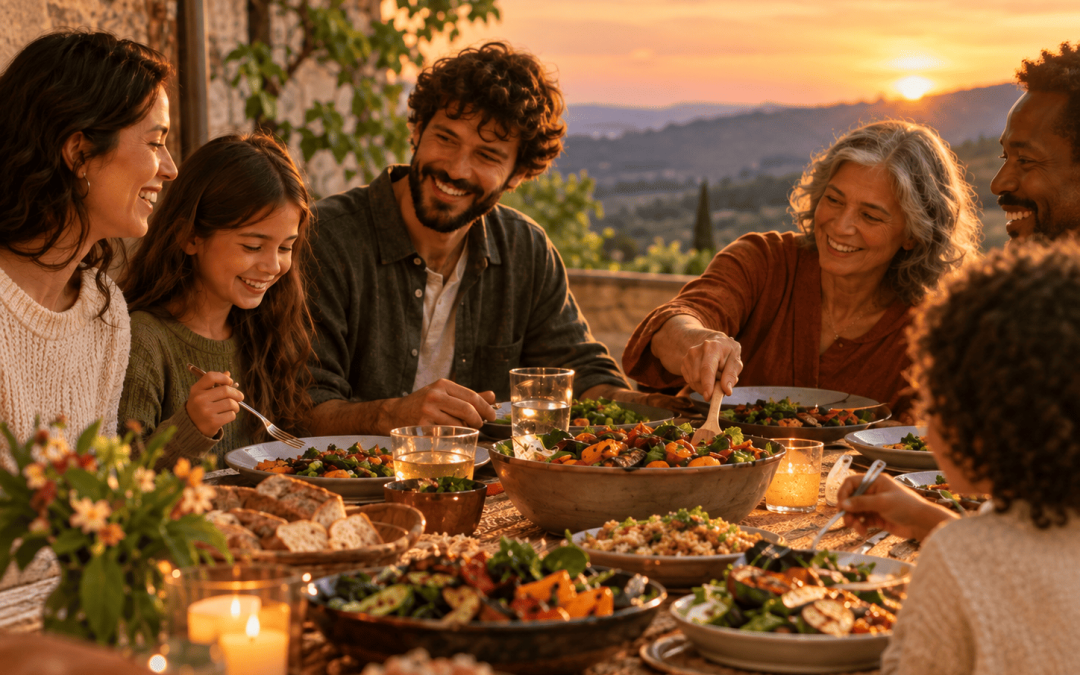
A Sunday barbecue can mean an afternoon spent with people you love, stories being told across the table, music playing in the background, children running around, and the feeling of everyone being together. A holiday dinner can mean cooking with your family, bringing out familiar dishes, sitting in the same places, and continuing rituals that have been repeated for years. Those experiences don’t disappear when the ingredients change.
A family recipe can be recreated with plant-based ingredients. A barbecue can still be a barbecue. A holiday dinner can still bring everyone to the same table. What changes is what’s on the plate — not necessarily what the meal means.
And plant-based options have continued to evolve, making it increasingly possible to recreate familiar dishes without using animal products. The goal doesn’t have to be reproducing every traditional meal perfectly. It can also be about discovering new versions of the foods we already love and allowing them to become part of the traditions that come next.
Culture Was Never Really About a Single Ingredient
A meal carries meaning, but that meaning was never tied to one specific ingredient.
It was tied to people — to the act of cooking for someone, to the repetition that turns a meal into a memory, to the conversations around the table, and to the rituals that bring people together year after year.
That’s why changing an ingredient doesn’t necessarily erase a tradition. It can recreate it.
Imagine children growing up with plant-based versions of the dishes their families have always made. They can still remember the smell of a Sunday lunch, the excitement of a holiday feast, or the feeling of gathering around a table with people they love.
The difference is that those memories don’t have to depend on an animal being raised and killed for the meal to happen.
This isn’t about giving up a connection to your roots. It’s about asking whether that connection was ever really about the animal — or about everything that happened around it.
And this is where veganism offers something more than a change in diet. It offers the possibility of creating traditions that reflect compassion as a value, rather than treating compassion as something that has to come second to tradition.
Every Generation Decides What It Keeps
No generation receives a tradition and passes it on completely unchanged.
Every generation filters it: keeps what still makes sense, lets go of what no longer does, and creates what’s missing.
That’s not a break from the past. It’s a continuation of it — just a conscious one instead of an automatic one.
A tradition doesn’t become more meaningful simply because nobody questions it. Sometimes, questioning a tradition is exactly how we decide what is truly worth preserving.
Choosing a plant-based diet doesn’t mean giving up celebration, memory, or cultural identity. It means deciding that compassion can be part of the recipe too — not added on top of tradition, but woven into how tradition gets carried forward.
This is how culture grows: shared meanings, behaviors, rituals, and values are learned, repeated, and passed from one generation to another.
Meat-eating traditions became part of many cultures through exactly this process. People learned them, repeated them, associated them with celebrations, and taught them to their children.
A vegan culture can develop in the same way.
Every vegan dinner shared with friends. Every plant-based version of a family recipe. Every holiday celebrated without animal products. Every child who grows up understanding that a celebration can be joyful without animals being part of the meal.
These aren’t just individual choices. Over time, they can become new traditions.
And traditions don’t only shape families and communities. They can also shape the relationships we build.
Finding a partner who shares your values around food, animals, and compassion can make it easier to create new traditions together — from the meals you cook at home to the celebrations you eventually pass on to the next generation.
That’s part of what makes shared values meaningful: they aren’t just things we believe individually. They can become part of the life we build together.
The Question Was Never Really About the Meat
Culture isn’t a fixed recipe handed down untouched.
It’s a living, evolving thing — shaped by every generation that gets to decide, consciously, what deserves to be carried forward and what no longer fits who they’ve become.
The question isn’t whether tradition will change. It always has, and it always will.
The real question is what we want those changes to mean.
Maybe the next generation doesn’t have to inherit every tradition exactly as it was handed to them.
Maybe we can keep the gatherings, the recipes, the celebrations, the stories, and the sense of belonging — while creating space for something that wasn’t always given the same place at the table: compassion.
And maybe one day, a child growing up with vegan traditions won’t wonder why their family chose not to serve meat at a celebration.
It will simply be part of their culture.
A tradition they inherited — because someone, before them, decided it was worth creating.
Don’t miss the Veggly Blog
As Veggly grows further, make sure you stay up to date and read messages from vegan and vegetarian users who found love among the community – all on this page here.
Stay up to date with all of our announcements, other news stories, blog posts, and recipes by following Veggly across our social channels: