The decision to abandon veganism is a complex phenomenon involving biological, social, and systemic pressures. However, by returning to animal protein consumption, an individual re-inserts their demand into an industrial machine that remains the primary driver of environmental degradation and biological suffering in 2026.
1. Reasons for Quitting and the Influence of Social Media
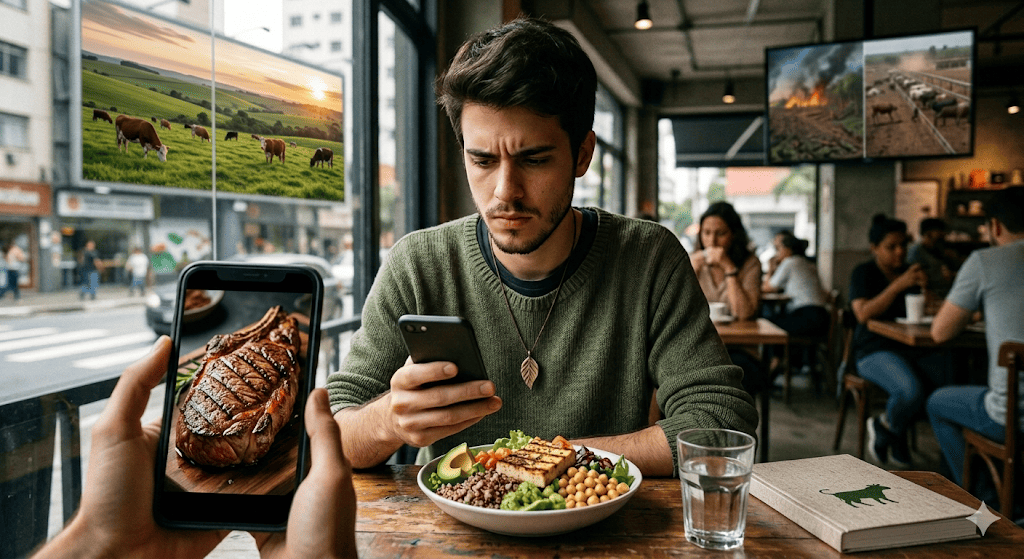
Returning to meat is rarely an isolated choice; it is often the result of a cultural siege:
- Social Pressure and Isolation: The human desire to belong to a group is powerful. The exhaustion of being the “exception” at social events often outweighs ethical conviction.
- The Predatory System of Social Media: Many people are motivated by “lifestyle” examples on social media, where influencers promote meat consumption as a symbol of status, health, or “peak performance,” creating a false perception that veganism is unsustainable.
- Cognitive Dissonance: Social media platforms focus on the aesthetics of the plate while hiding the reality of the slaughterhouse, helping ex-vegans “forget” animal suffering.
- Convenience and Accessibility: In a fast-paced world, the ease of finding cheap, ultra-processed meat contrasts with the need to plan nutritious plant-based meals.
2. The Impact Calculation: Meat and Nature
Returning to meat has a direct mathematical cost to the planet. The numbers behind livestock are alarming:
- Deforestation: Globally, cattle ranching is a leading cause of habitat loss. It is estimated that for every 1 kg of beef, up to 30 square meters of native vegetation may be sacrificed for grazing or feed crops.
- Water Consumption: Producing 1 kg of beef requires an average of 15,000 liters of water (considering everything from crop irrigation for feed to the slaughter process).
- Carbon Emissions: Every kilogram of beef produced emits approximately 60 kg of CO2 equivalent, significantly accelerating global warming.
3. The Industrial Machine: U.S. Giants and Meat Tonnage
The United States is a global powerhouse in the meat industry, moving billions of dollars and millions of tons:
- Industry Giants: Corporations like Tyson Foods, Cargill, and National Beef dominate the market. These companies process millions of animals annually to meet both domestic and international demand.
- Massive Production: The U.S. remains one of the world’s largest producers and exporters of beef. In 2025/2026, production levels reached millions of tons, requiring vast amounts of land and resources that could otherwise feed humans directly.
- Corporate Influence: By returning to meat, consumers strengthen the market share of these giants, who lobby for policies that keep animal products artificially cheap and environmental regulations lenient.
4. The Psychology of Pain and Animal Sentience
Beyond the numbers, there is the subjective reality of beings who feel:
- Sentience and Emotion: Neuroscience confirms that animals possess brain structures to process pain, fear, and panic. Slaughter cuts short the life of a being with social bonds and a will to live.
- Slaughterhouse Terror: Psychologically, the slaughter process is a systemic panic event. Animals smell blood and hear the desperation of others, creating a state of absolute anguish that is “invisibilized” at the moment of consumption.
- Empathy vs. Consumption: Returning to meat requires the human brain to “switch off” empathy. Treating a living being as a commodity is a form of ethical impoverishment that ignores the other’s capacity for suffering.
5. The Celebrity Effect: Public Examples
The abandonment of veganism by public figures creates a “domino effect” of misinformation:
- Famous Examples: Celebrities like Miley Cyrus and Anne Hathaway left veganism, claiming issues like “brain fog” or “lack of energy.”
- The Power of Narrative: When someone with millions of followers claims they “needed meat to feel healthy,” they validate nutritional myths and discourage thousands who seek an ethical life, reinforcing the idea that veganism is a “phase” rather than a moral commitment.
Impact Summary (Per 1kg of Beef)
| Resource | Estimated Impact |
| Water | 15,000 Liters |
| Land | ~30 m² of native vegetation |
| Grain (Feed) | ~7kg of soy/corn |
| Suffering | Death of a sentient, conscious being |
Conclusion: The Power of Community
Changing habits is difficult when we try to do it alone. The system around us is designed to make us give up, but connecting with others who share your values is the best form of resistance.
Don’t feel alone. To maintain your conviction and find practical support, make friends and build a vegan community on Veggly. Being surrounded by people who understand your choices makes the journey lighter and prevents the predatory system from silencing your voice for animal liberation.
Don’t miss the Veggly Blog
As Veggly grows further, make sure you stay up to date and read messages from vegan and vegetarian users who found love among the community – all on this page here.
Stay up to date with all of our announcements, other news stories, blog posts, and recipes by following Veggly across our social channels: