Veganism is often seen as a single path, one rooted in compassion, ethics, and a desire to reduce harm. But when it comes to food and health, the reality is far more complex. Within the vegan community, there are different ways of eating, different motivations, and sometimes, different contradictions.
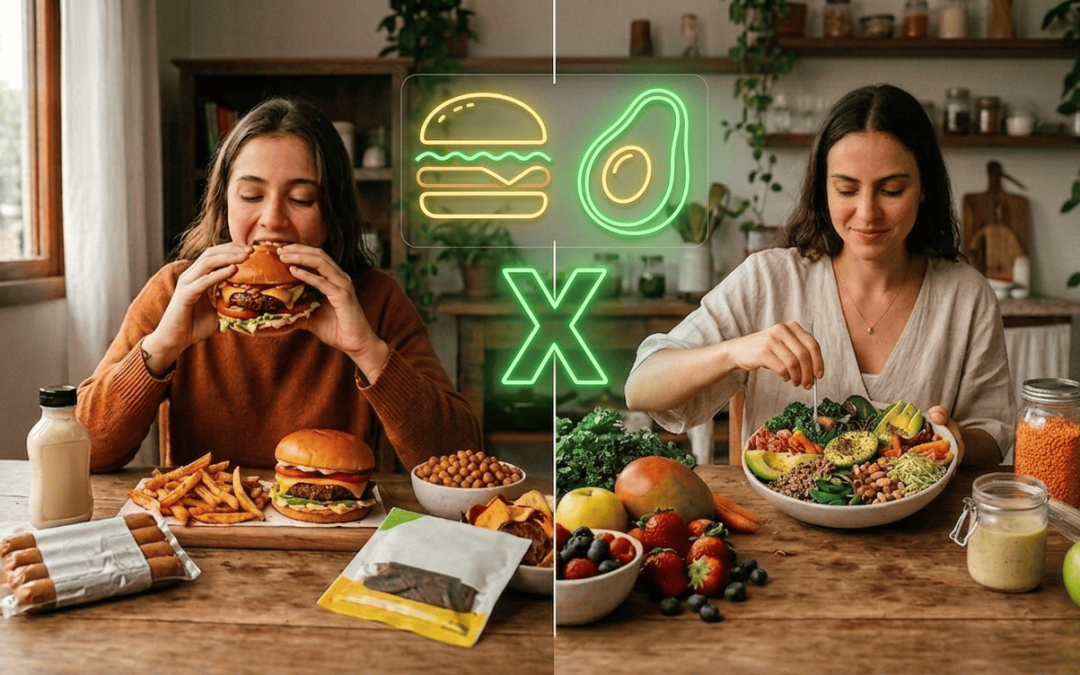
On one side, we find vegans who rely on ultra processed foods, plant based burgers, vegan cheeses, and meat alternatives designed to replicate familiar tastes and textures. For many, these foods carry emotional weight. They represent comfort, nostalgia, and a bridge between past habits and present values. A vegan sausage at a barbecue or a plant based burger on a date can feel like belonging. These foods can make the transition to veganism easier, more inclusive, and more sustainable socially. However, they also raise questions about health, since many ultra processed options may be high in sodium, additives, and low in essential nutrients.
On the other side, there are vegans who choose a more natural approach, focusing on whole, minimally processed foods like fruits, vegetables, grains, and legumes. For them, veganism is not only about ethics but also about health, simplicity, and a deeper connection to what they eat. Some take this even further, embracing raw veganism, where food is consumed in its most natural, unaltered state.
So, is vegan food actually good for your health?
The answer depends on how you eat. A vegan diet based on whole foods can be rich in nutrients, fiber, and antioxidants. At the same time, a diet centered around ultra processed products may not offer the same benefits, even if it is entirely plant based.
Some people are fully aware that ultra processed foods may not be the healthiest choice, yet they prioritize emotional satisfaction, convenience, or accessibility. Others reject these products entirely, choosing instead to nourish themselves with foods in their simplest form.
This divide is not a conflict, it is a reflection of how personal food choices can be. Veganism goes beyond food choices, it is an ethical and political stance. Within it, eating habits can vary widely, from whole food plant based approaches to raw vegan lifestyles.
At its core, perhaps the question is not just whether vegan food is healthy, but why we choose the foods we eat.
Are we seeking comfort? Health? Connection? Identity?
In a world where food is deeply tied to culture, memory, and emotion, there may be room for all these paths, so long as we remain conscious, intentional, and informed.
Because being vegan is not just about what is on your plate, it is about the choices behind it.
Don’t miss the Veggly Blog
As Veggly grows further, make sure you stay up to date and read messages from vegan and vegetarian users who found love among the community – all on this page here.
Stay up to date with all of our announcements, other news stories, blog posts, and recipes by following Veggly across our social channels: